
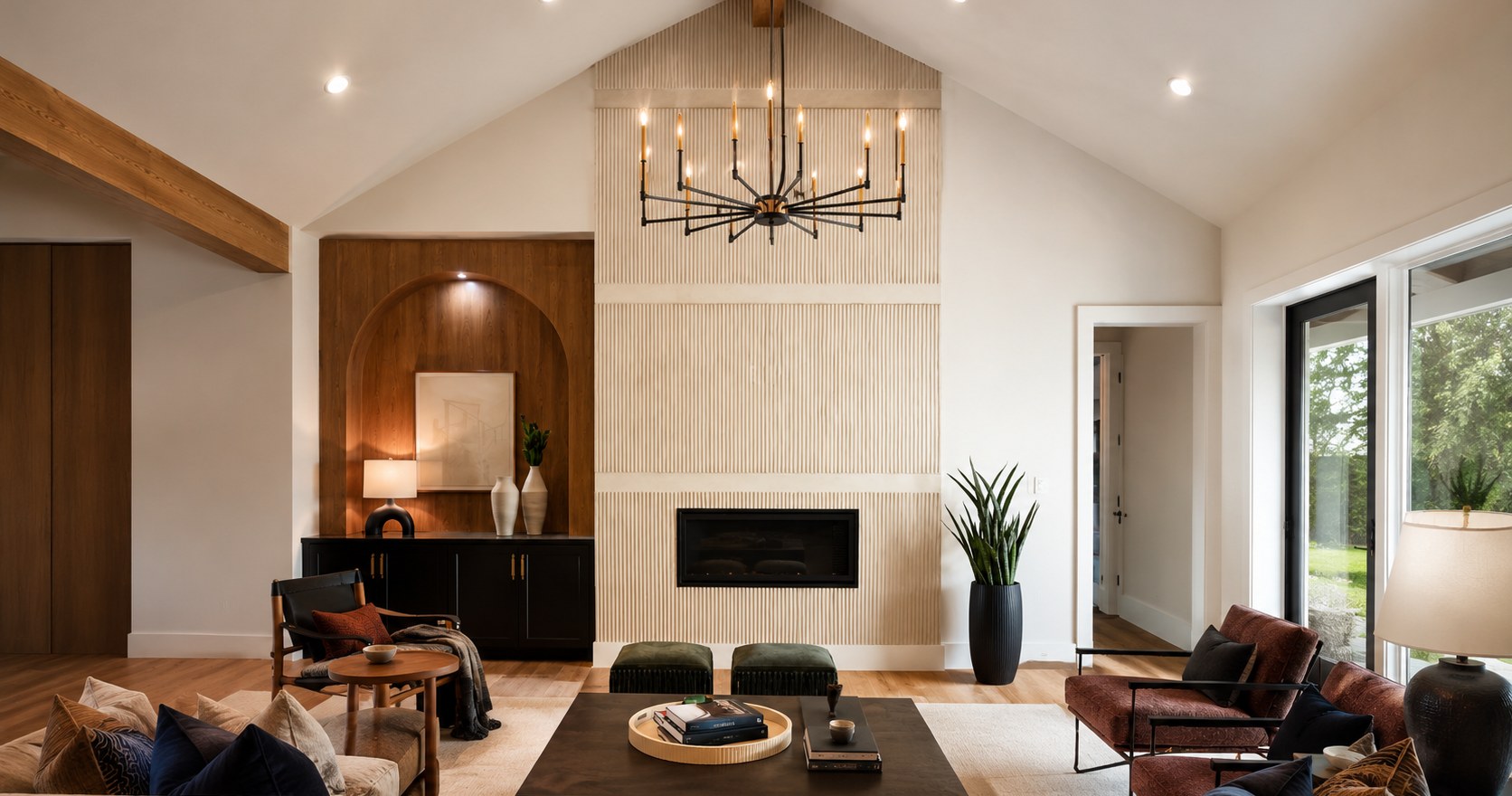
Color Unlimited Painting
Decorative Plaster Finishes
Hand applied texture and soft matte depth, shaped for your space.
Decorative plaster can bring soft movement and depth to interior walls. We review the surface, desired texture and sheen with designers, contractors and homeowners, then select and sample a suitable material for the project.
Choose the finish by material and effect
Clay-based coatings and lime-based plasters can both create movement, but they are different materials with different preparation, application and care requirements. We compare samples for color, texture and sheen before naming a product in the written scope.
The written scope states whether a decorative finish uses a PCA P19 sample board or mockup and, when agreed, a PCA P5 full on-site benchmark. See how we define samples and finished work.
Soft matte finishes for interior walls
Decorative plaster can add visual depth to bedrooms, entries and living spaces. The right system depends on the wall, exposure and desired finish. We check the manufacturer’s requirements before recommending a material for a specific surface.
Preparation and a practiced hand
The finished surface reflects the condition of the wall beneath it. We assess repairs and primer needs, then apply the selected system according to its instructions. A sample helps establish color, texture and movement before work begins on the wall.
Give the room its character
Color, lighting, tools and application can change how movement reads in a room. We review samples alongside the surrounding materials so the finish suits the space.
Scope and estimate
Wall condition, area, material, color and any specified protective treatment shape the estimate. We discuss product availability, budget and schedule before confirming the finish and preparation in writing.
Fluted feature and surface examples

Surface
A plain wall with small surface imperfections before preparation.

Application
Crew member on scaffolding troweling the fluted decorative plaster chimney mid-install, blue masking tape visible, drop cloths on built-ins
Surface preparation, Roman Clay application, and a warm fluted feature.
Charcoal walls and texture examples

Finish detail
Finished charcoal decorative plaster dining room in University Park with an oval marble table and sculptural pendant lights

Application
University Park dining room walls mid-installation with raw plaster passes, before final burnish

Texture detail
Hand-troweled decorative plaster close-up showing the trowel-pass texture, kitchen range hood detail
Surface preparation, Roman Clay application, a charcoal dining room, and a close view of troweled texture.
What it is like to work with us.
“They are respectful of their customers and their homes, reliable, on-time, professional, and do beautiful work.”
Selecting a finish
A material chosen for your project.
We review the wall, desired texture and sheen, budget and schedule before specifying a decorative plaster. The chosen product and any protective treatment appear in the written scope.
- Clay-based finishes
- Soft matte movement on surfaces suitable for the selected product
- Lime-based plasters
- A separate material category with its own texture and sheen options
A sample and the manufacturer’s instructions guide the final specification.
Request a consultationPlanning your project.
Review the surface, sample and care requirements for the finish you choose. For guidance on your project, talk with our team.
How do you choose a decorative plaster?
Can decorative plaster be applied over existing paint?
Is a decorative plaster washable?
Is clay plaster the same as Venetian plaster or limewash?
Can I request Portola Roman Clay?
Discuss your project.
Share the surfaces, finish goals, and project stage so we can review the scope with you.